Autor: Sebastian Gerling

  • How AI Can Solve Its Own Energy Crisis – Reflections from Varun Sivaram’s TED Talk

    Last night, I encountered a TED Talk by Varun Sivaram that’s still reverberating in my mind. Sivaram, physicist and CEO of Emerald AI, tackled a question few dare to ask: What if artificial intelligence—famously power-hungry—could be the solution to the energy crisis it’s causing?

    The core idea is as audacious as it is rational. We’ve all seen the headlines: Data centers are multiplying, energy consumption is surging, and grids are groaning under the weight of the AI revolution. Sivaram reframes this challenge into opportunity—suggesting that AI-powered data centers must become “dynamic grid participants,” able to adapt both vertically and horizontally.

    Vertical distribution means shifting compute workloads in time—flexing heavy processing tasks so they run at moments when the grid is under less stress, or energy is greener and cheaper.

    Horizontal adaptation, meanwhile, leverages the global tapestry of data centers. If one facility faces a power crunch, non-urgent AI tasks can be migrated to another region instantly—like a continent-scale load balancer for both energy and compute capacity.

    These twin strategies unlock a new paradigm: Data centers, not as energy drains, but as shock absorbers for the modern grid; a partnership where AI algorithms orchestrate their own consumption to create surplus capacity instead of exacerbating shortages.

    Emerald AI: Turning Theory into Practice

    Emerald AI is at the forefront of putting these concepts into action. Their Conductor platform offers real-time orchestration of AI workloads, allowing data centers to serve not only compute needs but grid stability as well. In practical terms, this means:

    • Temporary reduction of power use when the grid is under stress, without sacrificing critical AI operations.
    • Collaboration with leading partners (NVIDIA, Oracle, top US & UK utilities) to demonstrate and scale the solution globally.
    • Accelerated connection of new data centers—as proven during a live trial in Phoenix where Emerald AI helped Oracle’s site cut its electricity draw by 25% during peak demand.
    • Facilitation of more renewable energy on the grid, since flexibility makes it easier to manage intermittent supply from solar and wind.

    Emerald AI and similar innovations prove that with the right intelligence—literally—we can make the explosive growth of AI sustainable, affordable, and climate-friendly.

    The Bigger Picture: Small Language Models and Flexible AI

    We shouldn’t overlook complementary developments, like Small Language Models (SLMs) and efficient, modular AI architectures. These can drastically lower the energy footprint of everyday queries and edge workloads, ensuring that not every computation requires a power-hungry mega-cluster.

    Through flexibility, distributed intelligence, and targeted efficiency improvements, the AI ecosystem can shift from being a grid-stressing liability to a key asset for grid resilience.

  • AI’s Hyper-Charged Electricity Appetite – How Artificial Intelligence Will Shake The Foundations of Industrial Energy Consumption

    The Energy Tsunami Behind AI’s Meteoric Rise

    Artificial intelligence isn’t just rewriting the rules of business and technology—it’s on track to become one of global industry’s hungriest energy consumers. While the media tends to focus on AI’s potential, few realize the sheer scale of its growing power demand. New studies are sounding the alarm: by 2030, AI-driven data centers could burn more electricity than legacy sectors like pulp and paper, mining, or even food processing.

    Let’s break down what’s happening, and why the energy world needs to pay attention.

    From Niche to Powerhouse: AI’s Current Footprint

    Back in 2024, the global energy consumption of AI—including large language models, image generators, and advanced machine learning pipelines—was roughly 49 terawatt hours (TWh) per year. To put that in perspective, it’s equal to the annual electricity use of a medium-sized country or about 4% of the steel industry’s huge energy appetite. – But this is just the beginning. Major players like OpenAI and Google report that a single prompt to an advanced AI like ChatGPT already consumes 3 to 10 times more energy than a typical Google search. The training phase of cutting-edge models? We’re talking the annual load of 100,000 households packed into a few weeks of GPU compute time.

    So, while AI currently sits at position 11 on the global energy leaderboard—behind industries such as textiles and non-ferrous metals—it’s gathering momentum. The next leap will be dramatic .

    2030: The Year AI Joins the Big Leagues

    Industry forecasters now expect AI’s annual electricity consumption to rise to an estimated 588 TWh by 2030. That’s 12 times higher than today and enough to power all of Japan for a year. The International Energy Agency, McKinsey, and top banks are converging on similar numbers.

    This growth rate will catapult AI—mostly in the form of hyperscale data centers—straight into the top six industrial energy consumers globally. In practical terms, by 2030 AI will use:

    • More electricity than pulp & paper (400 TWh)​
    • More than food & beverage (350 TWh)​
    • More than mining (300 TWh)​
    • Nearly as much as aluminum production (750 TWh)​
    • And almost half as much as the mammoth steel industry (1,200 TWh)​

    These numbers matter. They signal a coming clash between digital expansion and existing energy infrastructure.

    How AI Stacks Up Against The Industrial Giants

    To understand the scale, let’s look at today’s industrial energy champions:

    • Iron & Steel (1,200 TWh): The backbone of infrastructure and automotive. Heavily coal-fueled, with complex blast furnace processes.​
    • Chemical & Petrochemical (950 TWh): The single biggest consumer of electric power in manufacturing.​
    • Cement (800 TWh): Essential for construction, with massive per-ton energy intensity.​
    • Aluminum (750 TWh): The most electricity-intensive primary metal, reliant on grid-heavy smelting.​
    • Oil Refining & Petrochemical (700 TWh): Powering the world’s fuel, plastics, and chemicals.​
    • Pulp & Paper (400 TWh): Key for packaging, print, and hygiene—the majority from bioenergy.​
    • Food & Beverage (350 TWh): Includes processing, refrigeration, and packaging.​
    • Mining (300 TWh): The hidden engine behind the energy transition.​
    • Non-ferrous Metals (250 TWh): Copper, zinc, and related essentials.​
    • Textiles (200 TWh): Wet processing and dyeing drive demand.​

    AI (at 588 TWh by 2030) will be right in the middle of these titans. It will dwarf industries like paper, food, and mining, and nearly match aluminum manufacturing in absolute consumption .

    Data Centers: The New “Power Plants”?

    AI’s power draw is concentrated in hyperscale data centers. The US leads the race, accounting for 45% of global data center electricity use, followed by China (25%) and Europe (15%). Regions like Northern Virginia are already grappling with capacity issues—requiring the equivalent output of several nuclear plants just to keep up.​

    Germany’s own electricity use for data centers could explode from 18 TWh in 2022 to over 100 TWh by 2030, eating up 15% of the nation’s total power budget. Similar stories are playing out in Switzerland, the Nordics, and Pacific Asia.​

    This isn’t just about hardware. Every time you use AI, you’re tapping into one of the world’s largest unregulated utilities—and it’s growing fast.

    Environmental Stakes: More Fossil Fuels or a Greener Future?

    As the AI revolution accelerates, so do environmental risks. Studies estimate that 60% of the additional data center energy will still come from fossil sources in 2030, despite green initiatives. Global CO₂ emissions from data centers are set to rise from 212 million tons (2023) to 355 million tons by the end of the decade.​

    The world’s biggest tech firms aren’t immune. Google’s greenhouse emissions jumped nearly 50% since 2019, driven by its AI push. Microsoft saw a 29% uptick in three years. The climate costs of AI are no longer hypothetical—they’re being counted in real time

    Solutions: Smarter Algorithms, Smarter Infrastructure

    What can be done? Industry leaders are investing billions into more efficient chips, cooling systems, and energy management software. Algorithmic breakthroughs now double energy efficiency every 8 to 9 months. Some models can deliver similar accuracy with up to 70% less energy.​

    New operational strategies—like routing AI workloads to match renewable energy peaks—can reduce emissions up to 40%. Smaller, specialized models promise big results without the brute force. Location strategy is becoming essential, with hyperscalers migrating toward regions rich in clean renewable power.

    But all this takes planning, capital, and leadership. The choices made in the next five years will echo for decades.


    Why This Matters for Tech, Policy, and Every Business

    If you’re a decision-maker in IT, operations, or sustainability, the implications are huge. AI is moving from a curiosity to a core driver of your company’s energy profile—and likely, your cost base and compliance burden.

    • Infrastructure: Prepare for local grid constraints, higher prices, and power sourcing risks—all at hyperscale.
    • Regulation: Expect mounting pressure for transparency, renewable power sourcing, and lifecycle emissions reporting.
    • Strategy: Champion energy-efficient architecture, partner with innovators, and build in resilience at every level.

    AI’s rapid growth is mirroring the path of legacy heavy industry—but compressed into a single decade. The best leaders will see the risks and opportunities, and act accordingly.

    Conclusion: The Future Belongs to the Bold and the Thoughtful

    In the race between technological progress and sustainability, AI’s energy hunger will be a defining battleground. Those who adapt fast—balancing innovation with responsibility—will win the trust of customers, regulators, and partners.

    The new industrial revolution won’t be won on code alone. It will be shaped by every kilowatt saved, every smart decision, and every bold move toward a sustainable digital future.

    For references pls look here:

  • Yoshua Bengio on the catastrophic risk from uncontrolled AI agency

    On Thursday, I had the opportunity to attend the AI lecture „Avoiding Catastrophic Risk from Uncontrolled AI Agency“ at the Bavarian Academy of Sciences together with Gunnar Stöcker. The talk was held by Yoshua Bengio, one of the leading voices in AI, and it was both impressive and eye-opening.

    Beyond his compelling call for a realistic assessment of the risks emerging from current AI developments, two points from his somewhat dystopian call to action stuck with me:

    • Most companies seem to be out of the race for frontier AI. For me, this highlights the danger of European markets becoming dependent on American AI solutions. Yoshua identified two core risks here: First, most efficiency gains will benefit foreign companies, and second, these firms may outcompete local businesses due to access to proprietary frontier AI.
    • The second risk is even more troubling: beyond the loss of human control, we see an excessive concentration of economic, political, and military power—something already becoming visible today.

    It was a truly eye-opening evening. Thanks to Baiosphere for the excellent organization!

  • Event – Avoiding catastrophic risks from uncontrolled AI agency

    I was fortunate to get one of the last tickets for the upcoming „Munich AI Lecture“ with A.M. Turing Award winner Prof. Yoshua Bengio. The event will take place on Thursday, October 23, 2025, at 6:00 pm in the Plenary Hall of the Bavarian Academy of Sciences and Humanities in Munich.

    The lecture will address the topic: “Avoiding catastrophic risks from uncontrolled AI agency.” After the streamed talk, there will be a live stage discussion with an exclusive panel of speakers: Stephanie Jacobs, Head of Office at the Bavarian State Ministry of Science and the Arts; Prof. Dr. Gitta Kutyniok, Bavarian AI Chair for Mathematical Foundations of Artificial Intelligence at Ludwig-Maximilian University; and Andrea Martin, Chief Technology Officer at IBM. The discussion will be moderated by Dr. Michael Klimke, CEO of BAIOSPHERE Agency.

    It’s not every day that you get the chance to hear directly from one of the leading voices in AI, and I’m really looking forward to the exchange of ideas. Events like this are a great opportunity to step back from the daily AI buzz and think more broadly about where this technology is heading.

  • Dystopia in AI – or how Douglas Rushkoff run over my like a bus

    I had never heard of Douglas Rushkoff before – and honestly I did not expect such a keynote. It felt like being run over by a bus. The perspective he offered at DLD on AI and its dangers, combined with the historical context, was entirely new to me. I will definitely read his books, watch more of his talks, and listen to his podcast. The boldest move from my perspective was turning a panel into a captivating monologue – Pericles would have been proud. The Video of his speech can be found here 

    Rushkoffs Core Thesis

    Modern technologies – including AI – are often deployed by existing power structures in ways that disempower rather than empower people. The true potential of AI is not in quickly “delivering answers,” but in iterative questioning, collaborative thinking, and human metabolization of information.

    Key Points

    • Projection of Tech Elites’ Fear: The idea that AI may treat humans as poorly as tech leaders treat society reflects existing dynamics of control and exploitation.
    • Historical Parallels:
      • Industrial Age: Assembly lines and chartered monopolies served not efficiency for all, but de‑skilling of workers and power concentration for owners.
      • Dumbwaiter (food elevator): Designed not to ease labor, but to hide it – making human work invisible to elites.
    • What AI/LLMs really are: The first native app of the internet, turning the network itself into content. Their strength lies in connecting and re‑contextualizing information, not reflecting “reality.”
    • Wrong Paradigm (Industrial Thinking): Using AI for final answers or products creates feedback loops (e.g., blindly forwarding AI‑written business plans).
    • Right Paradigm (Generative Thinking): AI as a partner in process – like wind chimes you adjust iteratively. Humans respirate and compost data, giving it meaning together.
    • Hidden Costs of AI: Rare earth mining, water consumption, and human labor in data labeling – new invisible forms of work.
    • Alternative AI Paths: Beyond massive data models – e.g., small data, fractal approaches, and generative systems that go beyond statistical averages.

    Reflections & Takeaways

    1. Ask the right question: Not “What are humans for?” but “What is this technology for?” Humans are not instruments.
    2. Adopt iterative workflows: Use AI for question iteration, scenarios, perspective shifts, and dialogue, not for premature final answers.
    3. Expose hidden costs: Make ecological, material, and social impacts visible.

    Bottom Line

    Rushkoff’s view: AI does not automatically make us more or less human. We decide – through cultural framing, ethical choices, and collaborative meaning‑making. Used under industrial logic, AI pushes people down the value chain. Practiced as generative, relational work, it can make us more human.

    My view: AI is not just another technology. It will reshape society across all areas of life, social classes, and work environments. It is essential to remain aware of our own interpretive authority in the “dialogue with the machine” and to follow Rushkoff’s mantra: technology should serve people, not the other way around. Despite justified criticism of regulation, the EU AI Act is certainly a step in the right direction.

    Douglas Rushkoff – Short Bio

    Douglas Rushkoff is a media theorist, author, and professor known for his critical perspective on digital culture, economics, and technology’s impact on society. He has been named one of the “world’s ten most influential intellectuals” by MIT.

    He has written influential books such as Team Human and Survival of the Richest, and hosts the Team Human podcast. His work emphasizes how technology should serve humanity rather than exploit it.

  • The Hidden Foundation of AI Sovereignty: Energy Independence

    Further reflections on Günther Thallinger’s talk at this year’s DLD – Energy Sovereignty is Key

    The core of his talk focused on energy and circularity. Thallinger emphasized that electric motors reach around 85–90% efficiency, compared to just 20–30% for combustion engines – meaning EVs use three to four times less energy for the same distance.

    He also drew attention to the massive solar capacities already installed in countries like China and Pakistan – and how far behind Germany stands in this international comparison.

    The presentation was an eye-opener regarding the direction society in general, and Germany in particular, must take in order to remain future-proof and independent.

    This leads to a key insight: if Germany or the EU want to achieve true AI independence, it is not enough to rely solely on infrastructure projects such as IPCEI or on developing local AI providers. The decisive gamechanger will be energy sovereignty. Without energy sovereignty, there can be no real sovereignty — a fact already recognized by the United States through initiatives like the National Energy Dominance Council.

    To illustrate the gap: while China added over 200 GW of new solar capacity in 2023 alone, Germany’s total installed solar capacity only reached around 82 GW in the same period.

    This means we must accelerate the adoption of renewable energies, reduce regulatory barriers, and push forward the expansion of gigawatt factories, solar parks, and even tidal power plants. Fossil fuels and nuclear energy are not sustainable solutions – not only due to CO₂ emissions or unresolved nuclear waste storage, but also because of the long timelines involved in planning and implementation. While gigawatt factories can be built in a matter of months, gas plants typically require 4–6 years and nuclear power plants 10–20 years to complete.

    The broader context of the DLD discussions, including the geopolitical challenges raised in the panel with Benedict Franke, reinforced this point. The conclusion is clear: Germany and Europe must act decisively and without delay to build energy sovereignty as the cornerstone of future economic resilience and political independence. At the same time, efforts toward AI sovereignty must go hand in hand with this agenda — as neither technological nor political independence is possible without both digital and energy sovereignty.

  • It’s been a while – but I’m back

    Nur wer sich ändert, bleibt sich treu – Wolf Biermann

    It’s been a long time since I last posted here. The world kept turning, and in many ways the landscape in IT has shifted – new questions, new challenges, but also new opportunities. Over the past months, I’ve been following developments quietly, absorbing ideas, speaking to people, observing what’s changing. Now it’s time to bring those reflections back into focus.

    Going forward, you can expect updates here around three core topics that I believe will define much of what’s coming:

    • AI: not just the hype, but how we use it, how we govern it, how we make it meaningful.
    • Sovereignty: data, digital infrastructure, control, autonomy – for individuals, businesses, societies.
    • Energy Consumption: what powers our tech, what cost it imposes, and how we can make it more sustainable.

    Recently, I had the chance to attend the DLD conference, and two speakers in particular struck me with ideas that felt fresh and urgent: Dr. Michael Förtsch and Günther Thallinger. Their insights gave me new impulses – perspectives I hadn’t considered deeply before, that suggest new directions and questions I want to explore here.

    — Sebastian

  • 2021 was a blast – and thats why…

    2021 has ended with much less bang than many other years. Despite all, 2021 has been a very positive year for me – on those (for me important) three aspects: 


    Personal: First and most importantly – our son Anton  was born in June – since then nothing has been the same – but everything is better. His laughter and his open, friendly and positive personality makes me proud and happy every day. Everything else, admittedly, falls a little short in comparison… 

    Antons preference for naps in the stroller have led to 100+ hours on Blinkist and Pluralsight and opened up whole new worlds for me. Among other things, the Blink on „Digital Minimalism“ has led me to reduce my procrastinating time to almost zero by rigorously deleting all social media apps on my phone – but I still allow myself „Der Spiegel“ and Wikipedia for waiting times.


    Sports: I achieved a new personal record as I managed to go running, hiking or do Crossfit on over 350 days this year – this helps immensely with my balance – especially in my 2nd year home office – I feel fitter than I have in a long time.

    I finished 8th out of over 1,000 participants in our April Activity Challenge at CGI – with approximatly 3.5 h of sport in avarage over 4 weeks.

    This year I also did the big Lake Starnberg loop again with about 55 km and was able to prove to myself that I can run a half marathon – if I want to.

    In total, I have walked / ran / hiked about 7.4 million steps this year – that corresponds to an average of over 20,000 steps per day. In the process, I have climbed about 100,000 metres in altitude and was active for an average of almost 140 minutes per day.


    Professional and Corporate Citizenship
    : In 2021, CGI awarded me the „Builders Award“ for my turn around management in several critical media projects and for my commitment to Corporate Social Responsibility and Diversity. The Builders Award is given to about 10 people per year and only to one employee in Central and Eastern Europe. The Builders Award, the highest distinction awarded at CGI. „The Builders Award honours members whose behaviours and actions demonstrate leadership and whose contributions, over time, have helped generate outstanding value to CGI’s three stakeholders.“

    The Diversity Week initiated and carried out by my team, including the Diversity Cookbook in May 2021, has created the basis for increased awareness of the topic in Central and Eastern Europe.

    Two teams I supported took part in the Diversity Challenge of the Diversity Charter and we won first place with one of our projects, „Scan Neutral„. Scan Neutral checks the gender neutrality of job advertisements and is already being used at CGI throughout Germany. The second contribution DiFF (Diversity Feedback Form) for teams will be rolled out in January for the whole of Germany and enables all employees to anonymously give positive and negative feedback on the various diversity dimensions.

    From an idea on five Power Point slides, the CSR Days emerged, which we carried out in NL, DE and CZ with over 50 different actions – from clean-up actions in the Ahr valley to photo shoots for the ReDi School. My personal highlight here was the panel discussion with our Co Chair of the Board Julie Godin.

    At the end of our business year, I was invited to accompany our President Torsten Strass in the Annual Tour for Central and Eastern Europe in this year’s Gameshow and was able to win 5,000€ for BeeLife (European Beekeeping Coordinaton).


    Overall it was an amazing year and I am really looking forward what 2022 will bring with parental leave and first joined outdoor events with my son.

  • Corporate Digital Responsibility (CDR )| Standpunktbetrachtung 03/2021

    Der Zukunftsforscher Lars Thomsen hat 7 Tipping Points der nächsten 600 Wochen definiert (1). Einer davon ist KI (Künstliche Intelligenz) im Alltag. Tatsächlich befindet sich die Gesellschaft an einem Wendepunkt hinsichtlich der Nutzung von intelligenten Technologien.

    Nähert man sich dem Thema von der Geschichte her, so kommt man nicht umhin, auf die verschiedenen sogenannten Industriellen Revolutionen einzugehen:

    1. Industrielle Revolution (1760 – 1840) geprägt durch die Einführung der Dampfmaschine
    2. Industrielle Revolution (1890 – 1920) Einführung von Elektrizität und Fließband
    3. Industrielle Revolution (1960 – 1990) Aufkommen von Computer und Intranet
    4. Industrielle Revolution (2020- ongoing) Künstliche Intelligenz und erweiterte Sensorik

    Jede dieser Industriellen Revolutionen ist mit tiefgreifenden Veränderungen gesellschaftlicher Rahmenbedingungen einher gegangen, mit denen Werte und Normen an die neuen Gegebenheiten angepasst worden sind. Stellvertretend sei hier das Aufkommen von Gewerkschaften oder die Einführung von Sozialsystemen genannt, die eine Antwort auf die drängendsten Fragen des sich ändernden Mensch-Maschinen-Weltbildes waren.

    Die aktuellen Veränderungen, die vor allem durch eine immer stärkere Verbreitung von Maschine Learning, Automatisierung, künstlicher Intelligenz  sowie „smarten“ Devices gekennzeichnet ist führen zu der Notwendigkeit, sich mit den sozialen, kulturellen als auch gesellschaftlichen Konsequenzen dieser Entwicklung auseinander zu setzen.

    Gerade Unternehmen mit digitalen Geschäftsmodellen, digitalen Produkten und IT Dienstleistungen müssen hier eine Vorreiterrolle zukommen. Sie müssen Corporate Digital Responsibility (CDR) oder Digital Ethic zu einem Kern ihres Handelns und ihrer Unternehmenskultur machen.

    Der Kern einer CDR Strategie sollte aus folgenden Bausteinen bestehen:

    • Datenschutz und Datenethik, Umsetzung der rechtlichen Vorgaben, aber auch eine kritische Auseinandersetzung mit der Notwendigkeit der Speicherung und auch der Konsequenz der Verarbeitung und Kombination von Daten.
    • Firmenethik bzgl. des eigenen unternehmerischen Verhaltens und Ableiten eigener Empfehlungen basierend auf der Aussage, dass nicht jedes Handeln, welches legal ist auch ethisch richtig ist.
    • Nachhaltigkeit des eigenen Handelns: Ziel der CDR Strategie muss ein nachhaltiges, langfristiges und stabiles Wertesystem für das Unternehmen sein, an dem sich Mitarbeiter, Projekte und Produkte ausrichten können.
    • Gesellschaftliche Implikationen: Teil eines jeden Produktes und Angebotes muss die Betrachtung der möglichen negativen Auswirkungen auf die Mitarbeiter, Kunden und andere gesellschaftliche Stakeholder sein.
    • Betrachtung von „Technical Misconduct (2)“:  Digital Ethic muss auch immer mögliche negative Entwicklungen der eigenen Produkte berücksichtigen und Mitigationsstrategien fordern.

    Zusammenfassend muss Digital Ethic Teil einer umfassenden Corporate Social Responsibility Strategie sein, die neben der grundsätzlichen Verantwortung von Unternehmen für die sozialen Aspekte der Gesellschaft auch ein reflektiertes Auseinandersetzen mit den Folgen eigener digitaler Angebote und vernetzter oder smarter Produkte beinhaltet.

    1. https://fuse-ai.de/en/ki-blog/zukunftsforscher_thomsen_zukunftstechnologien/

    2. https://www.theguardian.com/technology/2016/mar/24/tay-microsofts-ai-chatbot-gets-a-crash-course-in-racism-from-twitter

  • Restart 2021

    In diesem Blog ist es in der letzten Zeit sehr ruhig gewesen, meine Aufgaben und Schwerpunkte haben sich verlagert und viel davon ist sehr Firmen und Kunden spezifisch und nicht „bloggenswert“.

    Allerdings beschäftige ich mich seit 2020 auch verstärkt mit Themen rund um Mitarbeiter, Diversity und CSR. Zu diesem Themenkomplex und auch zu einigen Management Fragestellungen möchte ich ab jetzt wieder verstärkt auf meinem Blog Artikel posten.

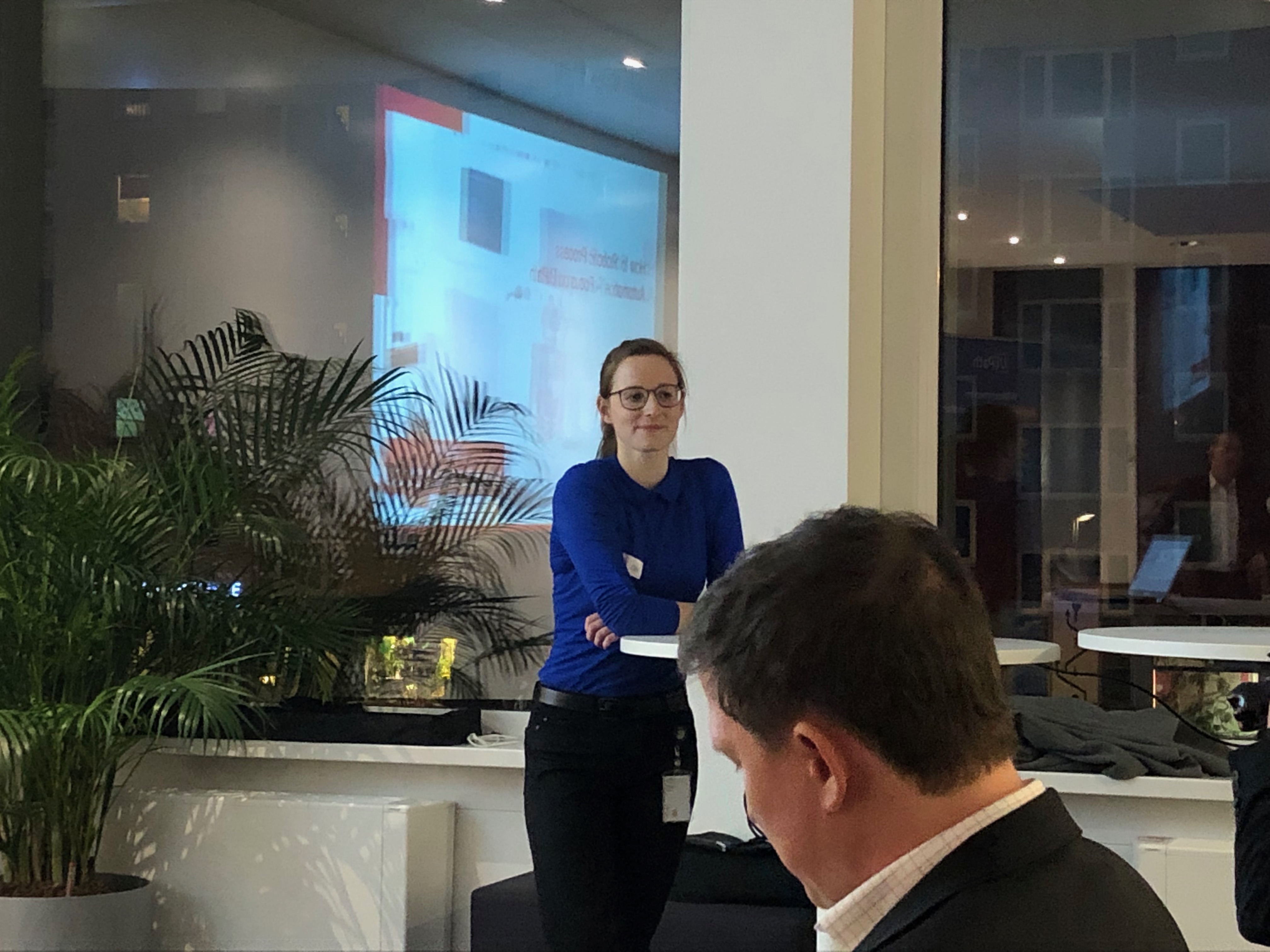
  • CGI will Host the Next Munich RPA Meetup on 04.03.2019

    Robotic Process Automation – one of the most hyped emerging technologies on the market. Multiple companies thrive to become more efficient and hand recurring, monotonous tasks over to Software Robots. RPA is said to be a catalyst for digital transformation and enabler for efficient usage of artificial intelligence. But how to get there?

    In our second Meetup, we’ll show you how to get from the process to the robot. Our guest speakers will introduce you to the Tool „UIPath„, one of the market leaders in PRA tools and fastest growing companies in North America, and lead you through example use cases.

    Speaker 1:
    Steffen Tenschert (UIPath) will introduce Robotic Process Automation to you, explain its characteristics, benefits and differences to Artificial Intelligence.

    Speaker 2:
    Andreas Obermair from New Innovation Management, a swedish consultancy company specialised in RPA solutions, will introduce the tool UIPath. He will guide you through the most important modules of the tool and show you how to get your automation started.

    After a short break, we will demonstrate use cases on how to develop an automation solution in UIPath.

    Come join us to enjoy beer and pizza and take the chance to meet & mingle with RPA experts, developers, and users.

    For More information please visit: https://www.meetup.com/Munich-Robotics-RPA-Meetup/events/258870564/


  • CGI will host the next Google Developer Meetup on G Suite Migration

    Dear all,

    CGI Munich will host the next Google Developer Meetup on 29.05. at 18:30 in our new Design Thinking Lab in Spixstr. 59.

    Presentation planed (Morgan Dias Simao / Sebastian Gerling)

    Consideration and approach for a migration from Microsoft to G Suite

    1. 1. General talk on migration and obstacles – what to keep in mind
    2. Specific topics
      1. Document Migration
      2. Site Migration
      3. Work with Office Vs Google
      4. Social (Lumapps)

    You are all welcome to join an open discussion on the pros and cons. Pls RSVP over Meetup.

    Sebastian


  • Munich SalesForce Meetup talking about GDPR

    Please find below the video of our last SalesForce Meetup in Munich talking about GDPR.

  • Join my team for SharePoint, Salesforce or Java EE / Microservices

    I am looking for SalesForce Admins and Developer, SharePoint Consultants and Java EE / Microservices Developer. We are a young and multinational team working in the automotive area. Our projects are local and within exiting agile environments.

    Please find below the links to the actual jobs:

    Salesforce

    SharePoint

    Java Architect

    Java Developer

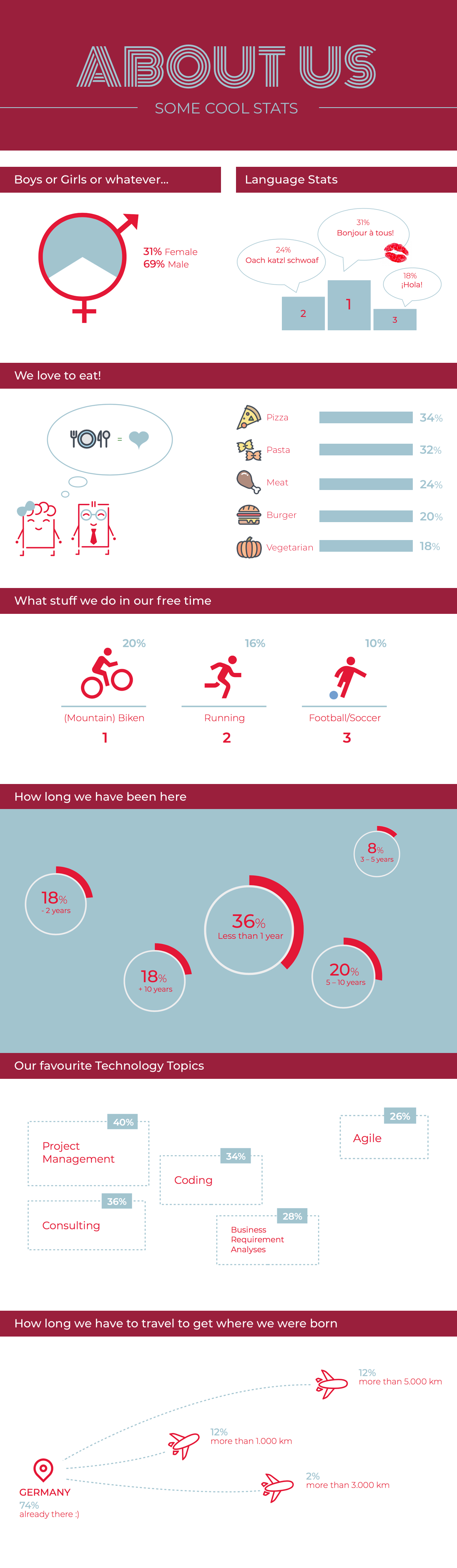
    If you are interested in the team you’ll join, please have a look on our team infographic below


  • Vortrag auf der Embedded meets Agile in München

    ich bin eingeladen worden auf der Embedded meets Agile am 26.04 in München über das Thema „Design Thinking vs Business Canvas Modell“ zu sprechen. Ziel ist es hier aufzuzeigen, wo die Unterschiede liegen, worauf gerade in Umfeld Embedded geachtet werden muss und wo in einer Kombination aus Fuzzy und strukturiertem Ansatz Mehrwerte liegen können.

     

    Weitere Informationen gibt es hier.

  • XMAS Treffen der SharePoint UG München bei CGI

    Wir veranstalten auch diese Jahr wieder ein XMAS Treffen der SharePoint UG München bei der CGI in der Spixstr. 59. Termin ist der 21.12. um 18:30. Dabei lassen wir  uns bei Glühwein von Max und Corinna auf Weihnachten mit SharePoint einstimmen, dafür haben wir folgende Vorträge:

    • Titel: Hybrid Search – Everything YOU need to know
    • Abstract: In diesem Vortrag werden die Vor- & Nachteile der neuen Hybrid Search für SharePoint 2013 & SharePoint 2016 demonstriert. Zudem demonstriere ich wie damit Fileshares, SharePoint 2010 und SharePoint 2013 in einem homogenen Such Index (Single Resultset) indiziert werden können – und das ohne großen IT Footprint.
    • Speaker: Max Melcher [Alegri]


    • Titel: ESPC Nachlese
    • Abstract: Corinna wird uns News und Eindrücke von der ESPC in Wien vorstellen – Quo Vadis SharePoint
    • Speaker: Corinna Lins [Bridging IT]
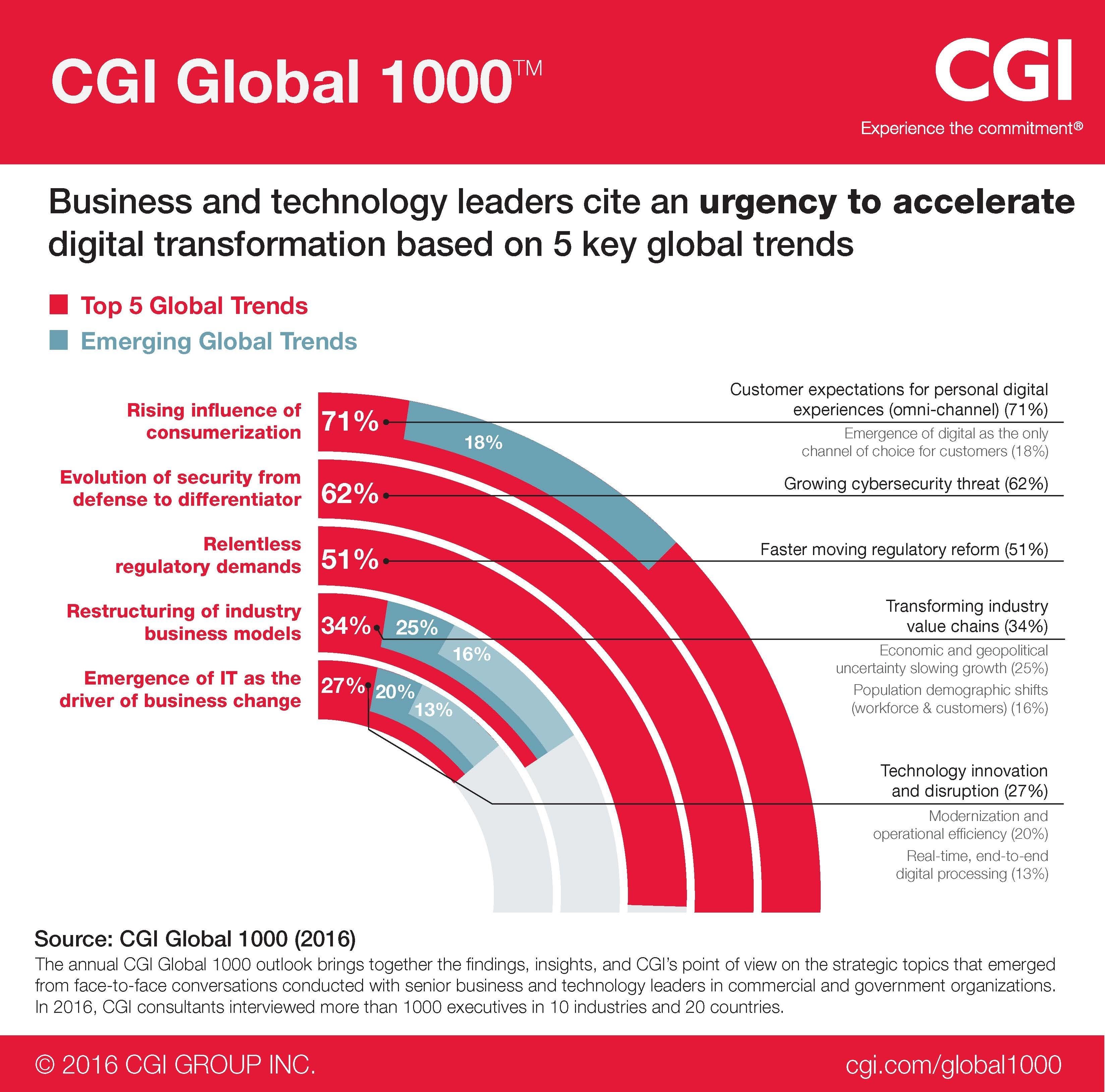
  • CGI has interviewed 1000 executives and thats the outcome in a nutshell…

    CGIs Global 1000 is one of CGI’s long lasting traditions in which we interview top executives from 10 different industries and 20 different countries about business and IT priorities. Following graphic does show the top 5 priorities for the upcomming years:

    2a08423b-880a-4629-8074-3950934422c7-original

    More Details can be found here.

  • Empfehlung: SharePoint Such Tipps von Wolfgang Miedl

    Wolfgang hat auf seinem Blog (SharePoint 360) einen super Artikel über Suchtipps in SharePoint veröffentlicht, der wirklich lesenswert ist und gerade für Endanwender in Unternehmen von großem Wert sein kann, um Zeit beim Suchen nach den richtigen Informationen zu sparen.

    Hier auch der Link zum direkten Download des PDF:

  • CGI startet Masterprogramm „Digital Business Management“

    bild1CGI sucht nach Masterstudenten, die berufsbegleitend an der Uni Reutlingen ihren Master of Science in Digital Business Management machen wollen. Dies ist der perfekte Einstieg in die Beratung und spannende Projekte im Bereich der Digital Transformation.

    Bei Interesse gerne bei mir melden – weitere Informationen könnt ihr hier finden: http://www.de.cgi.com/karriere/duales-master-studium-digital-business-management